
Best Pavers for a Pool Deck in Florida: What Homeowners Should Know
Choosing pavers for a Florida pool deck is different from choosing pavers for a driveway or front walkway.
A pool deck needs to look good, but appearance is only one part of the decision.
The surface may be exposed to intense sunlight, standing water, splashing, pool chemicals, outdoor furniture, landscaping debris, barefoot traffic, and heavy seasonal rain.
That means homeowners need to think about:
- Surface temperature
- Slip resistance
- Drainage
- Texture
- Durability
- Maintenance
- Color
- Style
- Pool coping
- Long-term repairability
The best pool deck paver is not simply the one that looks best in a showroom.
It is the one that works well for the property, the pool area, the homeowner’s priorities, and Southwest Florida’s climate.
Here is what homeowners should consider before choosing pavers for a pool deck.
Why Pavers Are Popular Around Florida Pools
Pavers are commonly used around pools because they provide homeowners with a wide range of design choices and can create a finished outdoor space that feels integrated with the home.
Depending on the material and style selected, pavers can offer:
- Multiple colors
- Different surface textures
- Various shapes and sizes
- Decorative borders
- Custom patterns
- Coordinating pool coping
- Easier localized repair than many continuous surfaces
Pavers can also help homeowners visually connect the pool area to patios, walkways, outdoor kitchens, lanais, and other hardscape areas.
But the pool environment has special requirements.
The right design should consider how the area will function when it is wet, hot, and being used every day.
1. Surface Temperature Matters in Florida
One of the first things homeowners should consider is how hot the surface may feel underfoot.
Florida pool decks spend long periods in direct sunlight.
Some materials and colors can absorb more heat than others.
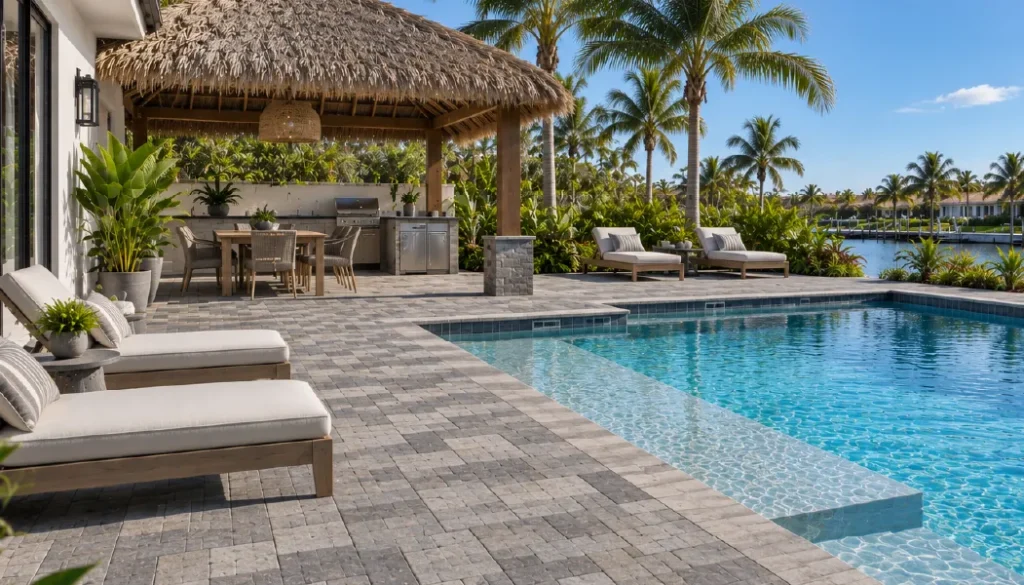
As a general design principle, lighter-colored surfaces often absorb less solar heat than very dark surfaces, although the actual temperature can depend on the specific material, texture, finish, weather conditions, and amount of sun exposure.
This matters because people frequently walk barefoot around pools.
When selecting a paver, do not judge it only by appearance.
Think about:
- How much direct sunlight the pool area receives
- Whether the area is shaded
- The color of the paver
- The material
- Surface texture
- How the area will be used during the hottest part of the day
A beautiful dark paver may fit the architecture perfectly but may not be the ideal choice for a completely unshaded pool deck if barefoot comfort is a major priority.
2. Slip Resistance Is Extremely Important
Pool decks get wet.
That is unavoidable.
People enter and leave the pool, children splash, rain falls, and cleaning adds even more water to the surface.
For that reason, the texture and traction of a pool deck deserve careful consideration.
A pool deck should not be selected solely because a finish looks smooth, glossy, or luxurious.
The surface needs to make sense in a wet environment.
Homeowners should discuss:
- Paver texture
- Surface finish
- Existing manufacturer recommendations
- Sealer selection
- Slip resistance
- How the area is actually used
This is particularly important if the deck is later sealed.
A sealing product should be appropriate for the pool-deck application.
Appearance matters, but safety and usability matter more.
3. Color Can Affect Both Style and Comfort
Pool deck color has a major visual impact.
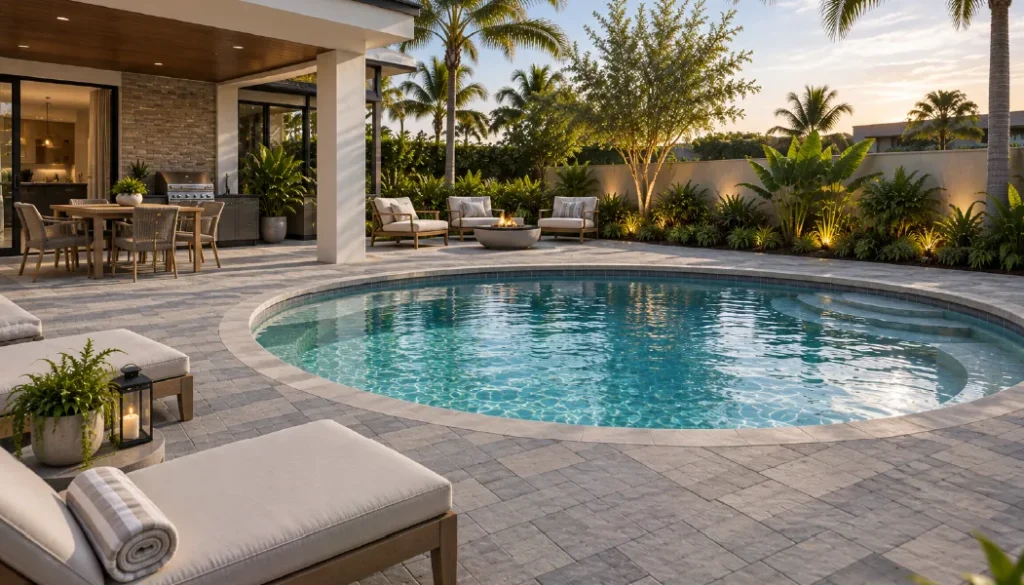
Lighter shades can create a clean, coastal, or resort-style appearance.
Neutral colors may blend more naturally with landscaping and the home’s exterior.
Darker accent colors can be effective for borders or design details.
When choosing a color, consider the entire property rather than looking at the pool deck in isolation.
Look at:
- Exterior paint
- Roof color
- Pool interior
- Waterline tile
- Screen enclosure
- Outdoor furniture
- Landscaping
- Patio or lanai
- Existing walkways
- Nearby pavers
The goal is to create a cohesive design.
A good pool deck should look like it belongs with the home rather than appearing as a separate project.
4. Concrete Pavers
Concrete pavers are a popular option for Florida pool decks because they offer significant design flexibility.
They are available in many:
- Colors
- Textures
- Shapes
- Sizes
- Patterns
Homeowners can create a traditional, contemporary, coastal, or modern look depending on the collection chosen.
Concrete pavers can also be useful when homeowners want to coordinate the pool deck with other areas such as:
- Walkways
- Patios
- Driveways
- Outdoor kitchens
- Entryways
Individual units can often be replaced if localized damage occurs.
As with any material, the exact performance depends on the product, installation, maintenance, and environmental conditions.
5. Travertine
Travertine is another material frequently considered for Florida pool areas.
It is a natural stone and can create a distinctive, upscale appearance.
Homeowners often like travertine because of its natural variation, texture, and lighter color options.
It can work particularly well with:
- Mediterranean-style homes
- Coastal designs
- Resort-style pools
- Neutral exterior palettes
Because travertine is natural stone, variation in color, pattern, and surface character is part of the material.
That can be an advantage for homeowners who want a more organic look.
However, material selection should still consider the specific product, surface finish, intended use, maintenance, and pool environment.
6. Texture Is More Important Than Many Homeowners Realize
Homeowners often focus on color before texture.
Around a pool, texture can be just as important.
A highly textured surface may provide a certain appearance and traction but may feel different under bare feet.
A very smooth surface may be comfortable but may require additional consideration when wet.
There is no single texture that is right for every homeowner.
The goal is to find a balance between:
- Comfort
- Appearance
- Traction
- Maintenance
- Intended use
Whenever possible, look at and touch actual material samples rather than relying only on website images.
Photos can make surfaces appear smoother or rougher than they really are.
7. Drainage Is Critical Around a Pool
A pool deck is exposed to water even on a sunny day.
When it rains, the amount of water increases substantially.
Proper grading helps water move away from areas where it could create problems.
A pool-deck installation should consider:
- Pool edge
- Home or lanai
- Doors and thresholds
- Drains
- Landscaping
- Screen enclosures
- Adjacent patios
- Existing elevations
Water should not simply be allowed to collect in low spots.
Standing water can contribute to maintenance problems and may make the area less comfortable to use.
This is especially important in Southwest Florida during periods of heavy rain.
8. Pool Coping Should Be Planned With the Deck
Pool coping is the finished material around the edge of the pool.
It is an important design element because it creates the transition between the pool and deck.
The coping can coordinate closely with the deck or provide contrast.
When planning a complete pool-deck renovation, homeowners should consider the coping and deck together.
Think about:
- Color
- Thickness
- Texture
- Shape
- Pool curves
- Corners
- Transitions
- Existing pool structure
A beautiful pool deck can lose some of its visual impact if the coping looks disconnected from the overall design.
9. Consider the Shape of the Pool
The shape of the pool can influence which paver size, pattern, and layout make the most sense.
A rectangular pool may work well with clean geometric layouts.
A freeform pool may require more cuts and transitions.
The installer needs to think about how the pattern will interact with:
- Curves
- Coping
- Steps
- Drains
- Columns
- Screen structures
- Landscaping
- Outdoor kitchens
The goal is to avoid a layout that feels awkward or visually crowded.
Good planning can make the finished pool deck feel intentional.
10. Maintenance Should Be Part of the Selection Process
Every outdoor surface requires maintenance.
Before choosing a pool deck material, ask what routine care is likely to involve.
Depending on the paver system, maintenance may include:
- Cleaning
- Removing organic growth
- Managing stains
- Joint maintenance
- Repairing localized movement
- Replacing damaged units
- Sealing when appropriate
Pool decks can be affected by:
- Water
- Sunscreen
- Leaves
- Food
- Drinks
- Outdoor furniture
- Pool chemicals
- Landscaping
Selecting a material based only on how it looks when new ignores how the homeowner will need to care for it later.
Should Pool Deck Pavers Be Sealed?
Sometimes, but the answer depends on the material and desired result.
A sealing system may help protect or enhance certain pavers, but product selection matters significantly around a pool.
The contractor should consider:
- Material type
- Existing condition
- Surface texture
- Wet conditions
- Desired finish
- Slip resistance
- Previous coatings
A glossy finish should not automatically be assumed to be the best choice for a pool deck.
The finished surface needs to remain appropriate for a wet outdoor environment.
Can Old Pool Deck Pavers Be Repaired?
Often, yes.
If a section of an existing paver pool deck has become uneven or damaged, it may be possible to repair only the affected area.
A typical repair can involve:
- Removing affected pavers
- Inspecting the base
- Correcting settlement
- Restoring elevation
- Reinstalling usable pavers
- Replacing damaged units if needed
- Restoring joints
This repairability is one of the practical advantages of individual paver systems.
However, if problems are widespread or the homeowner wants a complete redesign, a larger renovation may make more sense.
What About Weeds Around Pool Deck Pavers?
Weeds and organic growth can appear in paver joints over time.
Seeds, soil, and organic material may accumulate between the pavers and provide an environment where growth can begin.
Regular cleaning and joint maintenance can help.
It is also important to address landscaping and moisture conditions around the deck.
No responsible maintenance plan should promise that weeds can be permanently eliminated forever.
Outdoor areas are continually exposed to new organic material.
Which Paver Color Is Best Around a Pool?
There is no single color that is best for every Florida home.
However, lighter and medium-tone colors are often worth considering because they can complement a bright outdoor environment and may be more comfortable than extremely dark surfaces in full sun.
Popular design directions often include:
- Cream
- Beige
- Sand
- Light gray
- Taupe
- Natural stone tones
Accent colors can be incorporated through borders or coping.
The right choice depends on the home’s architecture and the homeowner’s desired style.
Should the Pool Deck Match the Driveway?
It can, but it doesn’t have to.
Some homeowners prefer one coordinated paver family throughout the property.
Others use related colors with different patterns or textures.
For example, a homeowner may choose:
- One paver for the driveway
- A lighter coordinating paver around the pool
- Matching border colors
- Similar tones throughout the property
This can create visual consistency without making every hardscape area identical.
What Is the Best Paver for a Florida Pool Deck?
The best paver depends on the homeowner’s priorities.
If design flexibility is most important, concrete pavers may offer a wide range of options.
If a natural stone appearance is the priority, travertine may be attractive.
If barefoot comfort is important, surface color and heat exposure should be carefully considered.
If maintenance is a concern, ask about cleaning, sealing, and repair requirements before choosing.
If the pool area is frequently wet, texture and slip resistance should be high priorities.
The right decision should balance:
Appearance + Comfort + Traction + Drainage + Maintenance + Budget
rather than focusing on only one factor.
What Should You Ask a Pool Deck Paver Contractor?
Before hiring a contractor, ask questions such as:
- What pavers work well for this type of pool area?
- How will drainage be handled?
- How will the deck meet the pool coping?
- What happens around drains and structures?
- Is demolition included?
- How will the base be prepared?
- What maintenance will the material require?
- Should this paver be sealed?
- How will damaged pavers be repaired later?
- What happens if matching pavers are needed in the future?
A good contractor should be able to explain the project rather than simply provide a square-foot price.
Frequently Asked Questions
What are the best pavers for a pool deck in Florida?
There is no single best product for every pool. Concrete pavers and natural stone such as travertine are common options. The ideal choice depends on heat exposure, texture, slip resistance, appearance, drainage, maintenance, and budget.
Do pool deck pavers get hot?
Any outdoor surface can heat up in direct Florida sun. Color, material, texture, shade, and weather conditions can all affect surface temperature. Lighter options are often worth considering for areas where barefoot comfort is a priority.
Are pavers slippery around a pool?
Slip resistance varies by material, texture, finish, and treatment. Pool-deck surfaces should be selected with wet conditions in mind.
Is travertine better than concrete pavers around a pool?
Neither is automatically better. Travertine offers a natural-stone appearance, while concrete pavers typically provide greater variety in manufactured colors, shapes, and styles. The right choice depends on the property and homeowner priorities.
Can pool deck pavers be replaced individually?
Often, yes. One advantage of individual pavers is that damaged units can potentially be removed and replaced without replacing the entire deck.
Do pool deck pavers need sealing?
Not always. The material, existing condition, desired appearance, and product requirements should be considered before sealing.
Can you install new pavers around an existing pool?
Yes, depending on the existing deck, elevations, coping, drainage, pool structure, and site conditions. The area should be professionally evaluated before installation.
Build a Pool Deck for the Way You Actually Live
Your pool deck is more than the area surrounding your pool.
It is where people walk, relax, entertain, gather, and spend time outdoors.
The right paver should therefore do more than look good in a sample book.
It should make sense for Florida weather.
It should work around water.
It should complement the home.
And it should be installed with proper attention to grading, drainage, base preparation, transitions, and long-term maintenance.
Choosing the right material is important.
Choosing the right installation is just as important.
Thinking About a New Pool Deck?
Master Z Pavers provides professional pool deck paver installation, repair, restoration, maintenance, and sealing throughout Southwest Florida.
We can help you evaluate paver styles, colors, textures, layouts, coping, and the specific conditions around your pool so you can choose an option that works for your property.
Request a Free Estimate
Call Master Z Pavers at (239) 877-5447.
Transform your pool area into an outdoor space designed to look great and perform in Florida conditions.
Get A Free Estimate