7 Signs Your Pavers Need to Be Re-Sealed
Pavers are designed for outdoor use, but that doesn’t mean they should
be installed and forgotten.
be installed and forgotten.
In Southwest Florida, driveways, pool decks, patios, and walkways are constantly exposed to intense sunlight, heavy rain, humidity, vehicle traffic, landscaping debris, irrigation, and other outdoor conditions. Over time, even a beautiful paver installation can begin to show signs that maintenance is needed.
For some properties, that maintenance may include cleaning, joint sand replacement, repairs, restoration, and eventually re-sealing.
But how can you tell when it’s actually time to re-seal your pavers?
The answer isn’t simply based on how many years have passed.
Instead, homeowners should pay attention to the condition of the pavers, joints, and existing sealer.
Here are seven signs that your pavers may be ready for professional evaluation
and possible re-sealing.
1. Your Pavers Look Dull or Faded
One of the first things homeowners tend to notice is a change in color.
Pavers that once looked rich and vibrant may gradually appear duller after years of exposure to Florida weather.
Southwest Florida receives intense sunlight throughout the year. UV exposure, rain, traffic, dirt, and normal weathering can all change the appearance of an outdoor surface over time.
If your pavers were previously sealed with a product intended to enhance their appearance, the difference can become more noticeable as that treatment wears.
However, faded-looking pavers don’t automatically mean they need another coat of sealer.
Sometimes the surface simply needs professional cleaning. In other cases, an existing coating may be deteriorating or there may be residue affecting the appearance.
The first step should be determining why the pavers look different.
Once the surface has been evaluated, you can determine whether cleaning, restoration, or re-sealing is the appropriate solution.
2. The Existing Sealer Looks Uneven, Hazy, or Worn
This is one of the more important signs to pay attention to.
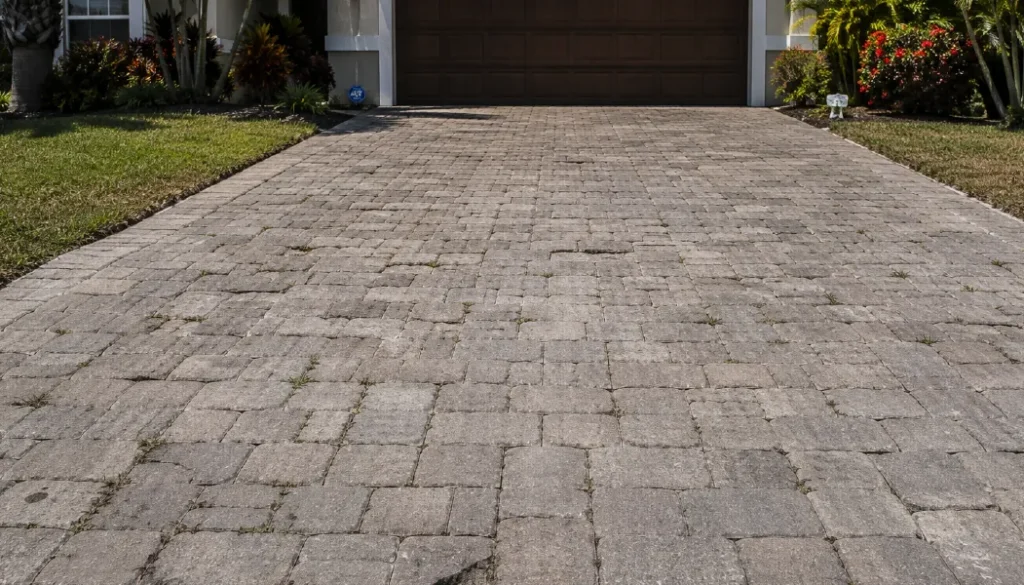
If your pavers were previously sealed, look closely at the surface.
Do some areas appear different from others?
You might notice:
-
Uneven sheen
-
Dull patches
-
Cloudy areas
-
Hazy areas
-
Whitening
-
Peeling
-
Visible coating deterioration
These conditions can indicate that the existing sealer is weathering or that there may be another issue with the previous coating.
But this is also where homeowners need to be careful.
Applying fresh sealer over a failing coating isn’t necessarily the correct solution.
The previous product, current surface condition, moisture, preparation, and compatibility of any new product need to be considered.
In some situations, additional preparation or removal of an existing coating may be necessary before the surface can be properly treated again.
Simply adding another layer can potentially make an existing appearance problem worse.
3. Your Pavers Are Becoming More Difficult to Keep Clean
Outdoor pavers will get dirty. That’s normal.
Driveways receive tire traffic, dirt, leaves, landscaping material, and potentially automotive fluids.
Patios can be exposed to food, beverages, furniture, plants, and everyday outdoor use.
Pool decks deal with water, sunscreen, landscaping debris, foot traffic, and pool-related exposure.
Over time, you may notice that routine cleaning no longer produces the same results it once did.
Stains may become more noticeable, or dirt may seem more difficult to remove.
Depending on the type of paver and previous sealing system, this can be an indication that the surface treatment has weathered.
Professional cleaning can help determine the actual condition of the paver underneath the dirt and buildup.
After cleaning, a contractor can better evaluate whether re-sealing would be beneficial.
4. Joint Sand Is Getting Low or Washing Away
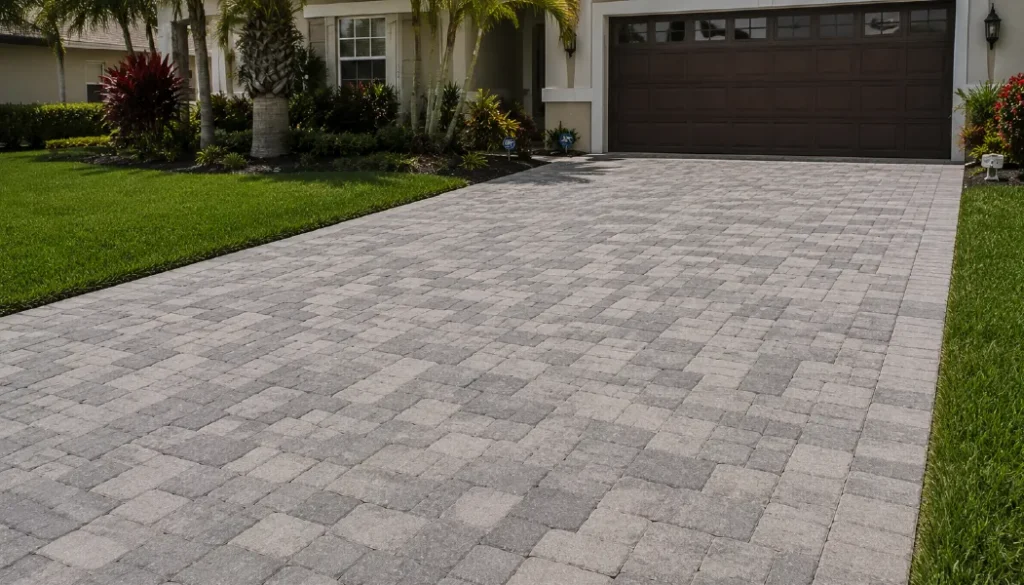
Look between your pavers.
The joints are an important part of the installation.
If you notice that joint material is significantly lower than it used to be, washing away, or missing in certain areas, your pavers may need maintenance.
This doesn’t automatically mean the pavers need to be re-sealed.
It means the area should be evaluated.
Joint loss can occur for different reasons, including weather exposure, cleaning practices, traffic, water movement, or deterioration over time.
Pay particular attention when sand repeatedly disappears from the same location.
That can sometimes point to a larger issue involving water movement, drainage, settlement, or the condition of the installation.
The goal shouldn’t be to repeatedly replace sand without asking why it keeps disappearing.
In some sealing systems, stabilizing joint material is one of the benefits of the overall maintenance process. But existing drainage or repair issues should still be addressed before sealing.
5. Weeds or Organic Growth Are Becoming More Noticeable
Homeowners sometimes assume that weeds growing between pavers are coming directly through the entire paver installation from underneath.
That’s not always what is happening.
Seeds, dirt, and organic material can collect within paver joints over time. Given enough moisture and favorable conditions, growth can begin within that accumulated material.
Southwest Florida’s warm and humid environment can also encourage algae and other organic growth on outdoor surfaces, particularly in shaded or damp areas.
If weeds or organic growth are becoming increasingly noticeable, it may be a sign that the paver area needs a more comprehensive maintenance service.
That may include:
- Cleaning
- Removing organic buildup
- Joint maintenance
- Addressing drainage or moisture conditions
- Evaluating the existing sealer
- Re-sealing when appropriate
Sealer shouldn’t be marketed as a magical permanent solution to weeds.
Proper maintenance involves looking at the complete paver system and the conditions surrounding it.
6. Water Interacts With the Surface Differently Than Before
After certain pavers are sealed, homeowners may notice how water behaves on the treated surface.
As the coating weathers, that behavior can change.
You might notice that water no longer reacts to the surface in the same way it did after the previous sealing treatment.
This can be one indicator that a surface treatment is wearing.
However, homeowners should not rely on a single “water test” to decide whether their entire driveway or pool deck needs to be re-sealed.
Different pavers and sealing products behave differently.
Surface contamination, wear, previous coatings, and other factors can affect what you see.
Consider this sign together with the overall condition of the installation.
If the appearance has changed, the surface is becoming more difficult to maintain, and the previous sealer appears worn, it may be time for a professional evaluation.
7. It Has Been Several Years Since the Pavers Were Professionally Evaluated
Homeowners often ask:
“How many years should I wait before sealing my pavers again?”
You’ll frequently see general recommendations suggesting that pavers may need re-sealing every few years.
But the calendar shouldn’t make the decision by itself.
Two paver installations of the same age can be in completely different condition.
Consider a driveway that receives:
- Full Florida sun
- Multiple vehicles every day
- Frequent irrigation exposure
- Heavy rain
- Landscaping traffic
Now compare that with a partially covered backyard patio that receives relatively light foot traffic.
Even if both were sealed on exactly the same day, they may not require the same maintenance at the same time.
That’s why the better question is:
“What condition are my pavers in now?”
If several years have passed since the pavers were installed, restored, or sealed, it may be a good time to have the surface evaluated—even if re-sealing isn’t immediately necessary.
Don’t Re-Seal Before Addressing Existing Paver Problems
Before re-sealing, take a step back and look at the entire installation.
Are any pavers:
- Sinking?
- Rocking?
- Uneven?
- Separating?
- Damaged?
- Holding water?
- Experiencing repeated joint sand loss?
If so, those conditions should be investigated first.
Sealer is not a structural repair.
It won’t correct an improperly prepared base.
It won’t lift a sunken paver.
It won’t correct the slope of a driveway.
And it won’t solve a drainage problem simply by covering the surface.
If a section needs to be lifted and re-leveled, it generally makes sense to perform that work before completing the final cleaning and sealing process.
What Should Happen Before Pavers Are Re-Sealed?
Professional paver maintenance involves more than applying a product to the surface.
The appropriate process depends on the condition of the pavers, but an evaluation may include looking at:
Existing Sealer
Is there already a coating on the surface?
If so, what condition is it in?
A deteriorating or incompatible existing coating may require additional attention.
Surface Condition
Are the pavers stained, dirty, faded, damaged, or covered with organic growth?
The surface needs to be properly prepared before a new treatment is considered.
Joint Condition
Is joint material missing or deteriorated?
Are weeds or organic material accumulating between the pavers?
Repairs
Are any pavers loose, sinking, rocking, or uneven?
Complete necessary repairs before the final maintenance treatment whenever appropriate.
Drainage
Is water pooling in certain areas?
Does sand repeatedly wash out?
Drainage issues should be identified instead of simply hidden.
Weather
Sealing products have application requirements involving temperature, moisture, drying time, and weather conditions.
Florida weather can change quickly, so application conditions matter.
What About Pool Deck Pavers?
Pool decks deserve special attention because they’re regularly exposed to water and people frequently walk on them barefoot.
If a pool deck needs re-sealing, the contractor should consider:
- Paver material
- Surface texture
- Existing coating
- Wet conditions
- Desired appearance
- Appropriate product selection
- Slip resistance
A glossy appearance shouldn’t be the only consideration.
The finished surface needs to make sense for how the area is actually used.
What About Driveway Pavers?
Driveways experience some of the most demanding conditions of any residential paver installation.
In addition to Florida weather, they receive:
- Daily vehicle traffic
- Turning tires
- Oil and automotive fluids
- Landscaping equipment
- Delivery vehicles
- Dirt and debris
A driveway maintenance plan should therefore include more than appearance.
Inspect the joints, edges, surface, drainage, and overall level of the installation.
If a localized area has moved, one of the advantages of a paver driveway is that affected sections can often be lifted and repaired without replacing the entire driveway.
Can You Re-Seal Pavers Yourself?
Homeowners can purchase paver sealing products, but the product itself is only one part of the job.
The bigger challenge is determining:
- What is already on the pavers
- Whether the surface is ready for another coating
- How thoroughly it needs to be cleaned
- Whether repairs are needed first
- Whether joint material needs attention
- Which product is compatible
- How much product should be applied
- Whether weather and moisture conditions are appropriate
A mistake during preparation or application can be much harder to correct after the sealer has cured.
If you’re dealing with a large driveway, pool deck, an unknown previous coating, visible haze, whitening, peeling, or significant surface problems, professional evaluation can be particularly valuable.
Frequently Asked Questions About Re-Sealing Pavers
How do I know when my pavers need to be re-sealed?
Look at the overall condition rather than relying only on age. Changes in appearance, deteriorating existing sealer, staining, joint loss, and increasing maintenance problems can all indicate that the pavers should be evaluated.
How often should Florida pavers be re-sealed?
There isn’t one schedule that applies to every property. Exposure, traffic, paver type, previous sealer, maintenance, and environmental conditions can all affect timing.
Do faded pavers always need sealer?
No. Pavers may look faded because of dirt, weathering, an aging coating, or other surface conditions. The cause should be identified before deciding on a treatment.
Can you apply new sealer over old sealer?
Sometimes, but not automatically. Compatibility and the condition of the existing coating matter. A failing, peeling, hazy, or incompatible coating may require additional preparation before another product is applied.
Will re-sealing fix loose or sinking pavers?
No. Sinking or loose pavers are repair issues. The underlying cause should be corrected before the surface is re-sealed.
Does paver sealer stop weeds?
Sealing and joint stabilization may help as part of an overall maintenance strategy, but no responsible contractor should promise that sealing permanently eliminates weeds.
Should driveway and pool deck pavers use the same sealer?
Not necessarily. The material, surface condition, desired appearance, traffic, wet conditions, slip resistance, and intended use should all be considered when choosing an appropriate treatment.
Your Pavers May Not Need Replacement — They May Need the Right Maintenance
Pavers that look older, duller, or less attractive than they once did don’t necessarily need to be replaced.
In many cases, the right combination of repair, cleaning, joint maintenance, restoration, and re-sealing can dramatically improve an existing paver installation.
The key is identifying what the surface actually needs.
Don’t automatically apply another layer of sealer because several years have passed.
And don’t assume an entire driveway or pool deck needs replacement because one area has developed a problem.
Have the installation evaluated, identify the cause, and choose the appropriate solution.
Not Sure What Your Pavers Need?
Master Z Pavers provides professional paver repair, restoration, maintenance, sealing, and installation throughout Southwest Florida.
We can evaluate the condition of your existing pavers and help determine whether they need cleaning, repair, restoration, re-sealing, or another solution.
Request a Free Estimate
Call Master Z Pavers at (239) 877-5447.
Let us help you protect your outdoor space and keep your pavers looking their best.
Get A Free Estimate